
Lucas Criminal History Checks
There is no all-in-one city search for Lucas criminal history. Each office proves a different part of the record. The sheriff holds reports it created and routes current custody questions. The county holding facility documents booking. The Lucas County Clerk of District Court keeps filed charges, orders, and outcomes. Iowa DCI supplies a fingerprint-supported statewide history, while Iowa DOC covers state prison and community-supervision status.
A five-step Lucas route keeps the city and county roles clear. Begin with what happened, not with a broad name search that may mix the two meanings of Lucas.
- Identify whether the event occurred inside Lucas city limits and which officer or agency responded. A sheriff's deputy, state trooper, or conservation officer may hold the report.
- Call the Lucas County Sheriff at 641-774-5083 for a sheriff incident, recent arrest, current hold, or warrant question. Ask who created the record before requesting it.
- Search Iowa Courts Online by party name or Case ID and choose Lucas in the County field. Open the result and check the filed charge, status, and disposition.
- Ask the Lucas County Clerk at 641-774-4421 for a public pleading, order, certified copy, or older file that the online index does not provide.
- Use DCI, Iowa DOC, or the Iowa Sex Offender Registry only when the question calls for that distinct statewide record.
A Lucas city arrest can appear in more than one system at different times. The initial agency label, booking entry, court case, and DCI cycle are related Lucas records, but they are not interchangeable.
Lucas Records Use County Systems
Lucas ranked as the county's third-largest incorporated place in the 2020 decennial Census place data, with 172 residents. Lucas's small scale helps explain the consolidated records route. Lucas does not publish its own police records counter, booking facility, or court-search system. Calls and visits for Lucas criminal records generally lead to Chariton, the county seat, where the Law Center and courthouse serve different parts of the process.
The U.S. Census Bureau's 2020 datasets page is the official source used to rank Lucas among the county's incorporated places.
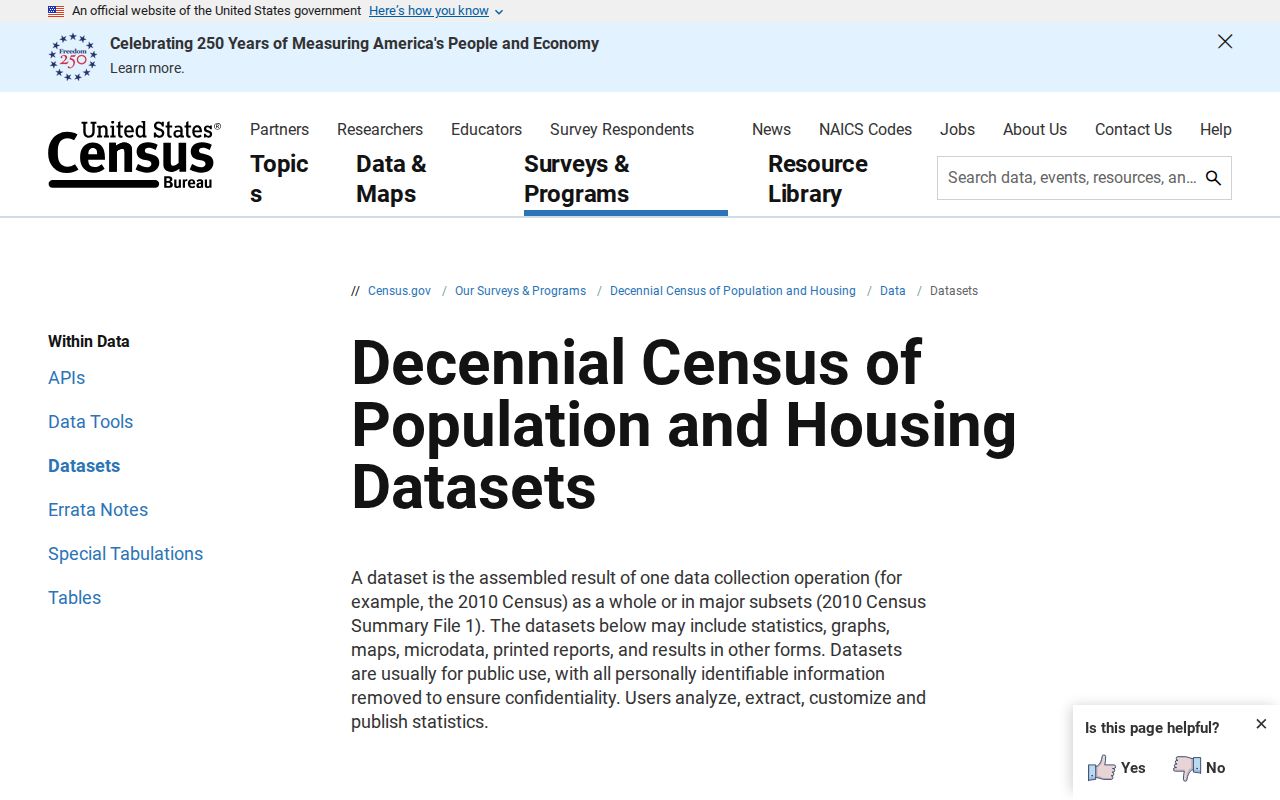
The Census source establishes Lucas as a distinct place, which matters when a record portal offers one field for city and another for county.
Lucas's size does not make Lucas records less formal. It changes where they are held. A report stays with the agency that made it, a booking belongs to the county holding facility, and a filed case belongs to the clerk. That division is the core of a sound Lucas record check.
Records at the Lucas Police Department
No official independent Lucas Police Department, police records unit, report portal, app, arrest log, or published city request form was located. The accurate starting point is the Lucas County Sheriff at the Law Center in Chariton. For an event inside Lucas, give the street or rural location, date and time, names needed to locate the event, and any report number. Ask staff to confirm the responding agency before sending a formal request.
This Lucas check matters because an Iowa State Patrol officer may create a state-highway record, and an Iowa DNR conservation officer may create its own enforcement record. The badge or agency name on the Lucas report controls the custodian. The City of Lucas municipal site is not a criminal-record database and should not be described as one.
The official Chariton Police page documents a separate city department serving Chariton from the shared Law Center.
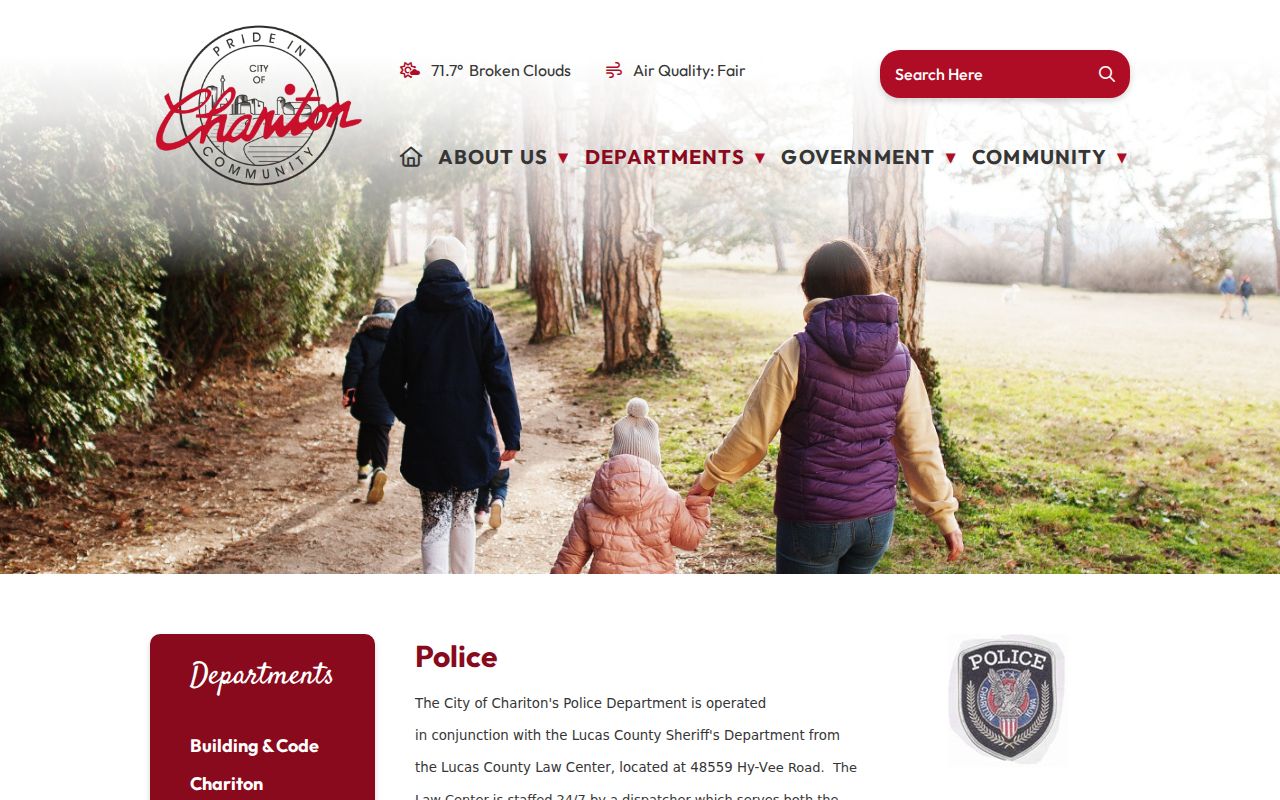
That distinction prevents a Lucas requester from sending a city incident request to Chariton Police merely because both names appear within the same county system.
Lucas Record Search Name Trap
The word “Lucas” can mean the city or Lucas County. Search tools do not always infer which one a reader intends. In Iowa Courts Online, use Lucas in the County dropdown, then add a person's last name, first or middle name, or a known Case ID. A city name alone is not a reliable way to isolate a court case. The last-name route requires at least two letters, and spelling must match the index. The percent sign can serve as a wildcard.
The registry works differently. Its city field can target Lucas, while its county dropdown targets all of Lucas County. A map or address-radius search adds another geographic view. DCI's record check is different again: it needs first name, last name, and exact date of birth, and its $15 charge applies per last name. Each Lucas record system therefore uses the place name in its own way.
When a result is absent, test the search logic before assuming no record exists. Check aliases, spelling, another county, restricted status, or a filing delay. A local incident might never become a court case, and a non-fingerprint arrest will not create a DCI history cycle.
Booking and Arrest Records in Lucas
Lucas has no independent Lucas jail or online booking log. A person arrested in or near Lucas is routed to the Lucas County Holding Facility at 48559 Hy-Vee Road in Chariton. The facility creates the intake record. That Lucas record may contain the name, booking time, arresting agency, initial charge, warrant or case reference, bond, fingerprints, photograph, and release or transfer status. The county does not publish a sample profile or web roster.
Call 641-774-5083 to ask whether a person is held, transferred, released, or booked under another agency. Lucas facility staff may limit what can be given by phone. A focused Iowa Chapter 22 request can seek releasable Lucas booking data that is not provided during the call. No dedicated inmate-information line, Lucas arrest app, warrant app, or roster portal was found.
An arrest is an allegation, not a conviction. Charges recorded at booking can change after review by the county attorney. For the filed accusation, initial appearance, bond order, and outcome, use the Lucas County court case lookup and clerk record. A very recent arrest may precede the court entry.
Lucas Reports Follow the Badge
Rural coverage makes the responding agency label a key record field. A Lucas County sheriff's deputy may answer one call. An Iowa State Patrol trooper may make a stop on a state highway. A conservation officer may handle a resource-law event. Each agency keeps the report it created even when the person later enters the same county holding facility.
For a Lucas request, supply the incident date and approximate time, exact location, involved agency if known, report number, record type, and enough party information to locate the event. State whether inspection or a copy is wanted, whether paper or electronic form is preferred, and whether certification is needed. Lucas County publishes no mandatory sheriff form, copy fee, ID rule, or guaranteed response time. Ask for a cost estimate and secure transmission instructions first.
Lucas record co-location does not merge records. The sheriff, Chariton Police, holding facility, and Fifth Judicial District community corrections share the Law Center, but each role remains distinct. A report from within Lucas should never be assigned to an office just because that office is in the same building.
The Lucas Municipal Court File
Lucas does not publish a separate municipal-court portal or independent city docket. Lucas state charges and locally initiated matters filed in Iowa's unified trial-court structure route through Iowa Courts Online and the Lucas County Clerk of District Court. The Iowa District Court, Fifth Judicial District, handles felony and misdemeanor cases, with magistrate and associate judicial functions addressing lower-level and preliminary matters.
| Court name | Lucas County District Court, Iowa Fifth Judicial District; no separate Lucas municipal portal found |
|---|---|
| Case types | Felonies, indictable and simple misdemeanors, preliminary matters, and related filed proceedings |
| Lookup channel | Iowa Courts Online basic public search, clerk-office public terminal, or direct clerk request |
| Public case fields | Case ID, county, type, filing date, parties, public attorney data, charges, status, disposition, events, sentence, and financial entries |
| Copies and fees | Ask the clerk about inspection, plain or certified copies, price, and retrieval time; local amounts were not published |
| Restricted material | Sealed, expunged, juvenile, protected-document, and unserved-warrant information may not appear publicly |
The clerk is at the Lucas County Courthouse, 916 Braden Avenue in Chariton, and can be reached at 641-774-4421. A Lucas public search result is an index, not a promise that every pleading can be opened online. Some links require subscriber access or a clerk-office terminal.
Lucas Records Split in Chariton
Two Chariton buildings divide the Lucas record trail. The Law Center holds the sheriff, county holding facility, Chariton Police, and Fifth Judicial District community corrections. It is the destination for a sheriff report, current custody check, local warrant question, or booking inquiry. Its sheriff counter hours are 8:30 a.m. to 4:30 p.m. on weekdays except holidays, with a noon to 1 p.m. closure.
The historic Lucas County Courthouse at 916 Braden Avenue holds the clerk and District Court record. Go there for filed pleadings, calendars, judgments, sentences, financial entries, certified copies, and expungement filings. The present courthouse dates to 1893, while the county's first 1850 log courthouse once combined offices, court, and jail. Modern access separates those jobs.
“Go to the county” is thus incomplete advice for someone from Lucas. First decide whether the needed fact comes from the incident, custody, or judicial stage. Then call the correct building before making the trip from the rural city.
How Lucas Records Reach the County
A Lucas incident starts with the responding agency. If an arrest follows, the county holding facility records intake and fingerprints. The county attorney decides what charge to file, and the clerk opens the District Court case. Courts and criminal-justice agencies report qualifying disposition data to DCI. A state prison sentence or community placement then creates a separate Iowa DOC search route.
Record flow: Responding agency in Lucas › Lucas County Holding Facility › Lucas County District Court › Iowa DCI › Iowa DOC when state custody or supervision applies
The Lucas sequence explains why timing changes search results. The report and booking may exist before a filed case. A court outcome may appear before DCI receives or posts the disposition. If fingerprints were not taken and submitted, DCI says the arrest does not create an Iowa criminal-history entry. A “no record” response in one channel does not erase another office's record.
After a Lucas county transfer, the Iowa DOC Offender Search is the right source for a state prisoner, community-based correctional client, or parole status. It is not a Lucas jail roster. Federal custody uses the Bureau of Prisons locator instead.
Lucas Federal Criminal Case Records
A federal case tied to a Lucas resident or event leaves the Iowa Courts Online path. Lucas County lies in the U.S. District Court for the Southern District of Iowa. The U.S. Attorney handles federal prosecutions, federal court records use PACER, and federal custody searches use the Bureau of Prisons. No federal prison is located in Lucas County.
The official PACER service requires an account and applies the current federal per-page fee schedule, subject to its quarterly waiver threshold.
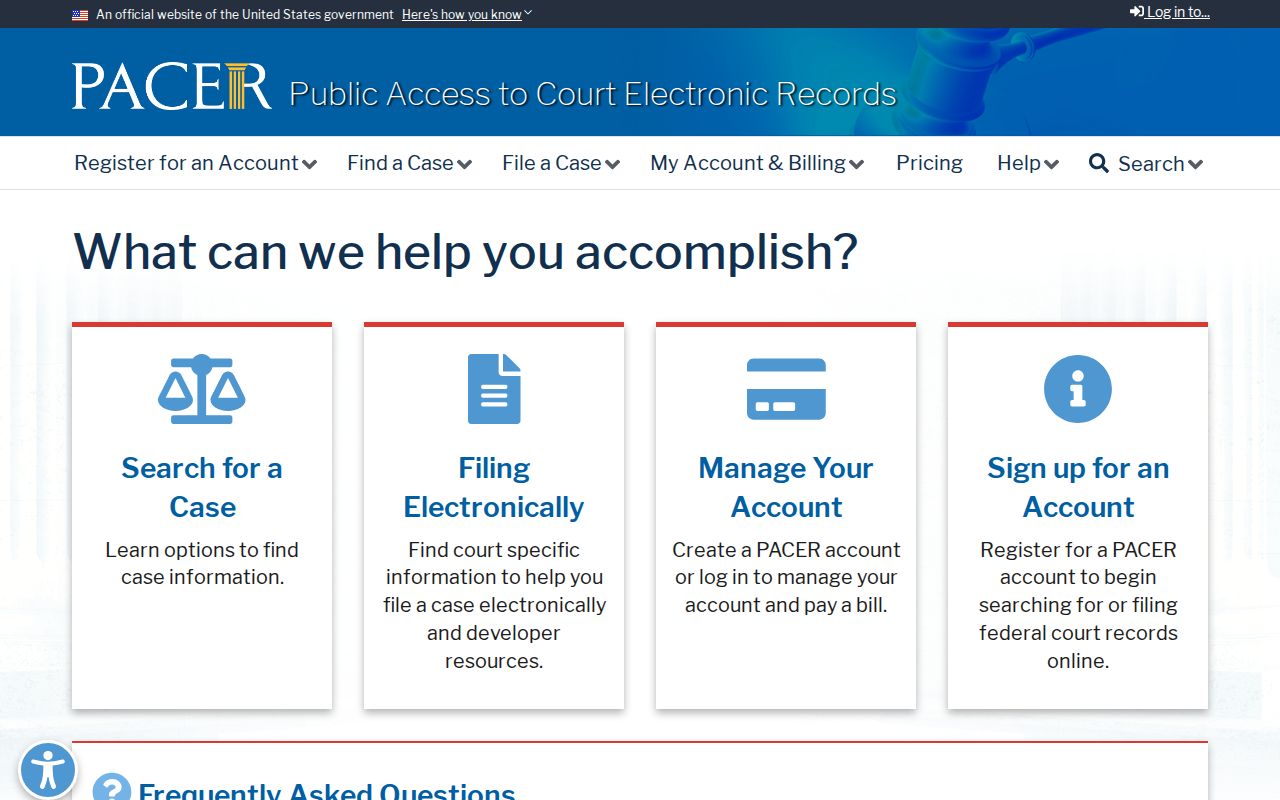
PACER is the docket source when a Lucas search concerns a federal charge rather than an Iowa District Court case.
The Southern District of Iowa's official website supplies current court and office contacts.
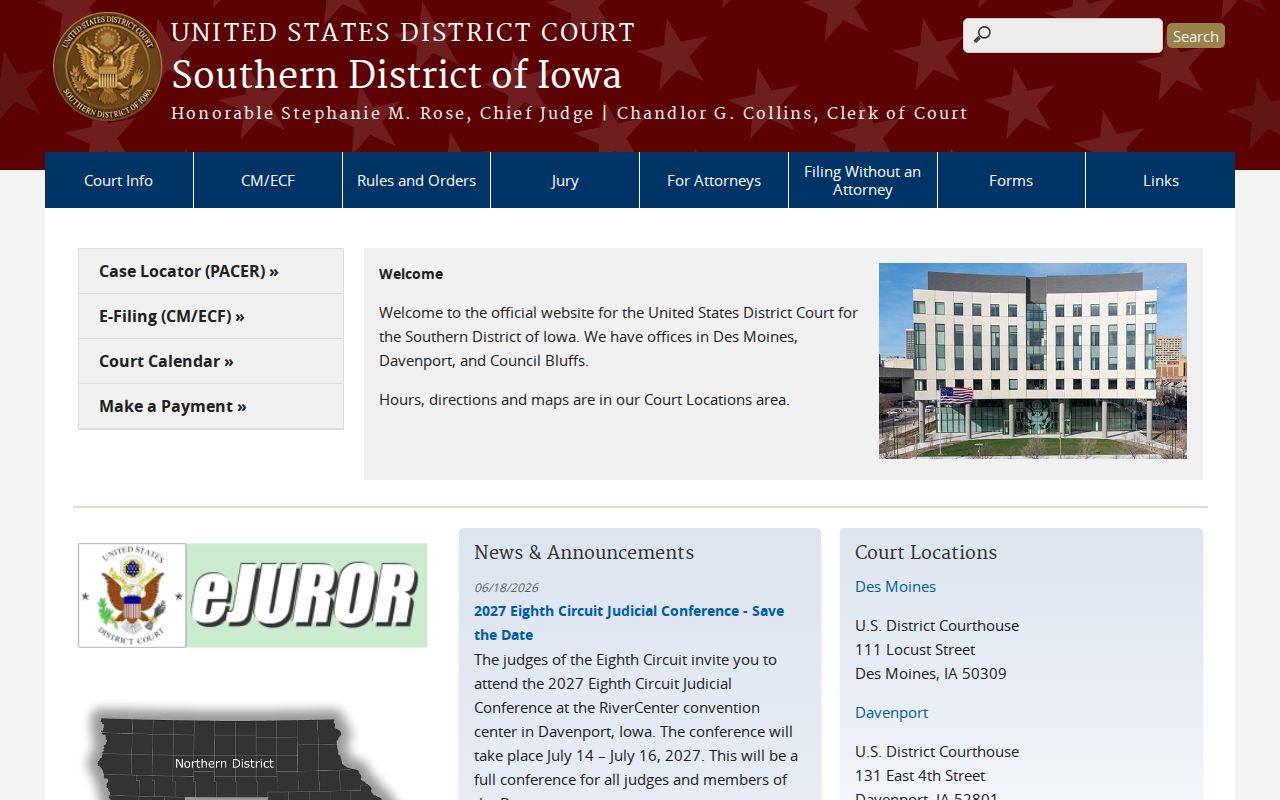
The district page prevents a searcher from assuming that the Lucas County courthouse maintains a federal file or offers a federal counter.
Lucas Record Access Rules
Iowa's public-access rules follow the record, not merely the city where an event occurred. The custodian must provide public portions that can be separated from protected material, but may redact confidential data, charge reasonable actual costs, or withhold a lawful exemption. A Lucas incident report can include public immediate facts while its investigative details remain protected. Court indexes also use public, protected, confidential, and sealed access levels.
Key Iowa access laws:
Iowa Code §22.2 gives every person the right to examine and copy public records, subject to lawful restrictions.
Iowa Code §22.3 governs supervision, copying, reasonable fees, and practical access arrangements.
Iowa Code §22.7(5) protects peace-officer investigative reports while generally leaving immediate incident facts open, unless release would harm an investigation or pose a clear danger.
Iowa Code §692.6 governs dissemination limits for state criminal-history information, including non-conviction records.
Ask for the segregable public part of a Lucas record and a statute-based explanation for any denial. The Iowa Public Information Board provides Chapter 22 guidance and accepts eligible complaints. Court access disputes and agency-record requests still follow their own processes.
Lucas Record Gaps Need Direct Checks
No official Lucas police portal, jail roster, arrest blotter, warrant list, municipal docket, law-enforcement app, or city crime table was found. Those gaps should stay visible. County totals must not be assigned to the city, and raw figures from a private listing should not be used as a Lucas danger score. Official Iowa DPS or FBI agency-year data needs its year, agency coverage, population base, and measure stated before comparison.
For a recent arrest, call the Law Center and confirm the booking and arresting agency. For an unserved warrant, online silence proves little because Iowa court access rules can keep the case confidential until service. Anyone checking their own possible warrant should contact the sheriff, clerk, or counsel for a safe resolution. For a registry search, compare the Lucas city field with the Lucas County field rather than treating them as the same boundary.
The best Lucas record check is often a short chain of direct checks. Match the name to the right place, match the record to its maker, and verify the final case outcome with the clerk. That method is slower than assuming one search covers all systems, but it respects what each official record can prove.